
Window films are thin laminates applied to the inside of automotive glass. The most common categories are dyed, metalized, hybrid (dyed + metal), carbon, and ceramic. The key differences come down to what the film uses to block light and heat:
- Dyed: A layer of dye absorbs solar energy and provides darkness and privacy.
- Ceramic: Uses nano-ceramic particles (non-metallic) embedded in film to block infrared heat and ultraviolet light while preserving optical clarity.
These material differences create meaningful performance gaps in heat rejection, UV blocking, color stability, and whether the film interferes with electronic signals.
Ceramic window tint — what it is and how it works
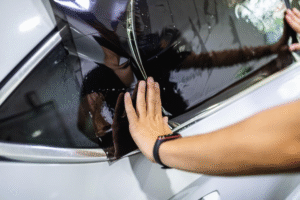
What it is: Ceramic films are built with millions of microscopic ceramic (nonconductive) particles dispersed inside an advanced polymer matrix. These particles are optically engineered to reflect or absorb infrared (IR) and near-IR radiation—the wavelengths that carry most of the sun’s heat—without adding metal.
How it works: Ceramic particles block heat and UV but do not conduct electricity, so modern ceramic films maintain radio/GPS/phone signal integrity while rejecting significant IR and UV energy. Manufacturer data for premium ceramic lines shows substantial reductions in total solar energy and very high IR rejection numbers—metrics you can use to compare films.
Why that matters: In practice, that means:
- Cooler cabin temps (less A/C load).
- Better protection for skin and interiors (high UV cut).
- No interference with GPS, phone, or keyless entry (unlike metalized films).
Dyed window tint — what it is and how it works
What it is: Dyed tint contains a layer of dye sandwiched between an adhesive and a protective top coat. The dye absorbs sunlight, giving the tinted look and some glare reduction.
How it works: Because dyed film primarily absorbs visible light and some UV, it provides good privacy and reduces glare, but it’s far less effective at blocking infrared heat than ceramic or metalized films.
Common real-world traits of dyed film:
- Lower cost up front.
- Good initial appearance (deep black look).
- Tendency to fade and purple over time (dye can degrade).
- Lower heat rejection and UV blocking than ceramic.
Head-to-head performance comparison
Heat rejection (real comfort)
Ceramic: Engineered to reject IR heat effectively—many premium ceramic films list high Total Solar Energy Rejection (TSER) and IR rejection values (example: some ceramic IR series list up to ~66% TSER and up to ~95% infrared rejection in manufacturer specs). That translates to a noticeably cooler cabin on sunny days.
Dyed: Provides modest heat and glare reduction but cannot match ceramic for IR rejection. If heat control is a main priority (hot climates, long parking in sun), ceramic pulls ahead.
UV protection (skin and interior)
Both dyed and ceramic films reduce UV, but ceramic films commonly advertise blocking up to 99% of UVA/UVB, and many meet or exceed Skin Cancer Foundation recommendations. Dyed films block some UV but usually at lower rates and with more variance between brands.
Optical clarity and night driving
Ceramic typically offers superior clarity (less haze), better low-light visibility at night, and reduced glare without coloring or purpleing. Dyed film can look rich when new but may degrade or discolor, which can reduce clarity over time.
Signal interference & electronics
Because ceramic films are non-metallic, they generally do not interfere with radio, GPS, satellite radio, mobile devices, or 5G signals. In contrast, metalized films (not dyed) can cause interference; dyed films typically don’t cause interference because they lack metal, but hybrid or metalized variants might. If you want zero risk of signal issues, ceramic is a safe pick.
Durability & fade resistance
Ceramic films are color-stable and resistant to fading, bubbling, and discoloration—manufacturers and shops often back them with longer warranties. Dyed films can fade (sometimes purple over the years), and adhesive/dye breakdown is the most common long-term issue.
Scratch resistance
Scratch resistance varies by top coat and brand more than by ceramic vs dyed per se—premium ceramic and carbon films often include more durable protective layers. Always check scratch/hardness specifications for the film you choose.
Cost, warranties, and long-term value (ROI)
Upfront cost: Dyed tint is typically the least expensive option. Ceramic is premium and costs more up front—sometimes significantly, depending on brand and installer.
Warranties: Ceramic manufacturers and reputable installers often provide longer or lifetime warranties on optical clarity, bubbling, delamination, and adhesive failure. Dyed films may have shorter warranties or more limited coverage.
ROI: If you measure value by total cost of ownership (lower A/C use, less interior degradation, longer film life, and fewer re-tints), ceramic often delivers better long-term value—especially in hot, sunny climates where heat rejection saves real money and protects interiors. Multiple industry write-ups and manufacturer claims support ceramic’s superior long-term performance despite its higher initial cost.
Which tint is best for different drivers & climates
Choose ceramic if:
- You live in a hot, sunny region and want maximum heat rejection.
- You park in direct sun frequently or drive often during daytime heat.
- You want the best UV protection for skin and upholstery.
- You rely on GPS, satellite radio, or keyless entry and need zero signal interference.
- You plan to keep the car long term and care about resale value.
Choose dyed if:
- Upfront budget is tight and your climate is mild.
- Your top priorities are privacy and appearance rather than heat control.
- You’re OK with re-tinting in several years if the dye degrades.
Consider hybrid/other films if:
- You want a middle ground: hybrid (dyed + metal) or carbon films offer intermediate price/performance. Carbon is a strong mid-tier choice for better heat rejection than dyed but less cost than top ceramics.
Installation, maintenance, and removal considerations
- Installation matters: Even the best film will fail if installed poorly. Choose a certified installer, and confirm they use templates or precision plotters for fit.
- Curing time: New film typically needs 2–10 days to fully cure (depends on adhesive type and environment); avoid rolling windows down too soon per your installer’s instructions.
- Cleaning: Use a soft cloth and ammonia-free cleaner. Avoid abrasive pads that can scratch protective coatings.
- Removal: Professional removal is recommended to avoid glass scratches or adhesive residue; premium films are generally removable without damage when done correctly.
Buying checklist — what to ask your installer
- Film brand and model (get the spec sheet: TSER, IR rejection, UV rejection, VLT).
- Is the film ceramic, dyed, metalized, carbon, or hybrid?
- Written warranty details (what’s covered, length, transferability).
- Ask for before/after photos of their work and online reviews.
- Inquire about signal interference guarantees (if concerned).
- Confirm they comply with local VLT laws and will provide any required tint certification.
FAQs
Q: Is ceramic window tint really worth the extra money?
A: For most drivers—especially in hot or sunny climates—yes. Ceramic offers better heat rejection, UV protection, and longevity, which often offsets the higher upfront cost.
Q: Will dyed tint fade or purple over time?
A: Dyed film is more prone to color change and fading than ceramic or carbon films; quality and brand affect how quickly this happens.
Q: Does ceramic tint block 99% of UV rays?
A: Many reputable ceramic films advertise UV rejection rates up to 99%, and some meet Skin Cancer Foundation criteria for UV protection—check manufacturer specs for exact numbers.
Q: Can I install ceramic tint myself?
A: DIY kits exist, but professional installation ensures proper fit, no bubbles, and warranty coverage—recommended for premium films.
Q: Does ceramic tint prevent signal reception?
A: No—premium ceramic films are non-metallic and designed not to interfere with GPS, phone, or radio signals.
Conclusion
- If heat control, UV protection, signal neutrality, clarity, and long life are your top priorities—go ceramic. It’s an investment but one that pays back via comfort, safety, and durability.
- If price and appearance are the immediate priorities and you accept eventual re-tinting, dyed offers a low-cost entry point.
